
 EN
EN
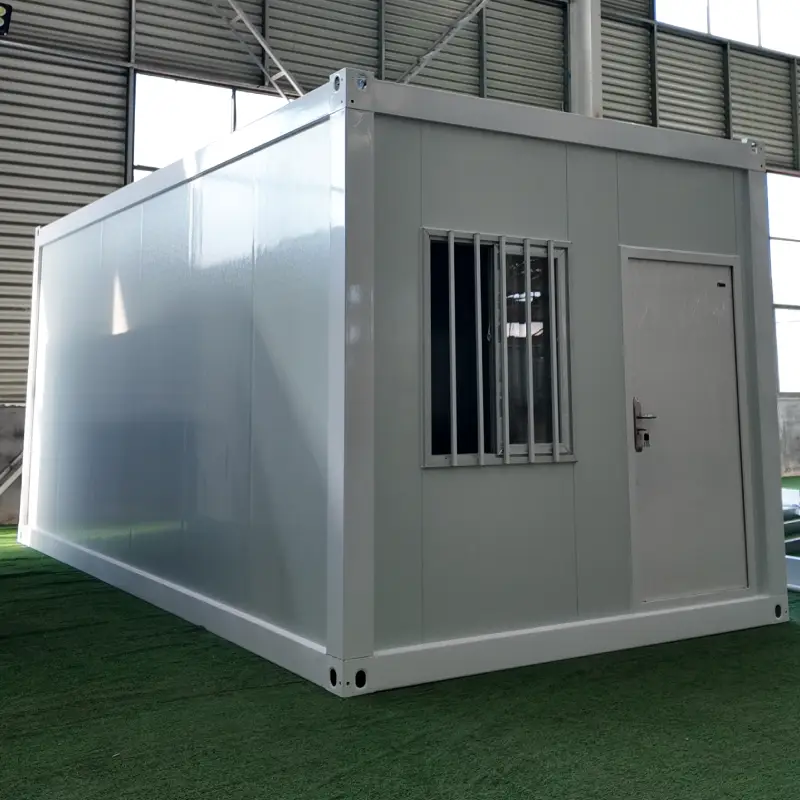
Site Preparation and Foundation Requirements for Foldable Container Home
Leveling, Drainage, and Diagonal Alignment Verification
Site prep should start with soil tests to make sure the ground can handle at least 2,500 pounds per square inch according to ASTM D1586 standards. Creating a slope of about 4 to 6 percent away from buildings helps keep water from collecting around foundations, while laying down 150 millimeters of compacted gravel improves how water drains beneath the surface. For leveling checks, surveyors rely on Grade Control Points (SGCPs) to ensure everything stays flat within a 3mm margin across the whole foundation area. Getting those diagonal measurements right between each corner matters a lot too they need to match up within 5mm or so to prevent twisting forces when the structure goes up. This measurement check isn't optional it's absolutely necessary before any actual installation work begins.
Foundation Compatibility: Concrete Slab vs. Pier-and-Beam for Foldable Container Home Stability
Foundation choice must match site conditions and long-term use intent:
| Foundation Type | Ideal Conditions | Load Capacity | Installation Time |
|---|---|---|---|
| Concrete Slab | Stable soil, flat terrain | 12,000 kg/m² | 7–10 days |
| Pier-and-Beam | Sloped or flood-prone sites | 8,000 kg/pier | 3–5 days |
Concrete slabs provide solid support across their entire surface area plus they offer good thermal mass properties, making them great choices when something needs to stay put permanently. For areas where the ground isn't level or there's a high water table, pier foundations work well. These are typically set using helical piles that get driven down about 1.5 meters into stable soil layers beneath the surface. When dealing with colder regions though, whether concrete slab or pier foundation, it's important to install frost footings that go deeper than 500mm below grade. This helps stop problems caused by freezing and thawing cycles over time. And speaking of connections, all bolts attaching structures to these foundations need to meet ISO 898-1 Class 10.9 specifications. Meeting these standards ensures proper clamping pressure stays consistent and maintains secure attachment points for years to come.
Unfolding, Positioning, and Structural Deployment of Foldable Container Home
Crane-Assisted Delivery, Ground Clearance, and Orientation Planning
Using a crane helps get the folded unit positioned just right on top of the foundation. There needs to be at least 1.5 meters of space underneath for several reasons: first, so the unit can unfold safely without obstruction, second, to give workers easy access when connecting utilities, and third, because maintenance will eventually need to happen down there too. When it comes to where the unit faces, think about getting the most sunlight possible. South facing works best if we're talking about locations north of the equator. The building itself should also be arranged to shield against those annoying prevailing winds that always seem to pick up at the worst times. Before anyone starts deploying anything though, someone needs to check that everything is level. A good quality laser level is essential here, looking for no more than plus or minus 3mm difference across the surface. Getting this right from the start saves headaches later on.
Step-by-Step Unfolding Sequence: Floor – Walls – Roof with Integrated Connection Points
Unfolding follows a strict, engineered sequence—floor first, then walls, then roof—to preserve structural continuity and prevent misalignment:
- Secure the base: Anchor the floor frame to foundation bolts using torque-controlled fasteners per ISO 898-1 Class 10.9 specifications.
- Deploy side walls: Extend wall panels horizontally until integrated connection points engage with an audible click—confirming positive mechanical lock.
- Raise the roof: Lift the roof section hydraulically and engage automatic locking hinges; verify full engagement across all hinge points.
A trained crew of two to three can complete deployment in under 60 minutes without heavy machinery. Immediately post-unfolding, inspect all panel joints for gaps exceeding 2mm—any such discrepancy compromises thermal performance, air sealing, and waterproofing continuity.
Structural Integrity Assurance: Bolted Connections and Panel Integration
Torque-Controlled Installation of ISO 898-1 Class 10.9 Bolts for Foldable Container Home Frame Rigidity
The ISO 898-1 Class 10.9 bolts serve as the main structural component for these systems, providing impressive specs including around 1,000 MPa tensile strength and approximately 900 MPa yield strength. These specs allow them to handle wind uplift forces reaching speeds of about 130 miles per hour without failing. When it comes to tightening these bolts, getting the torque right matters a lot. If there's too much variation from the target value (more than plus or minus 5%), joint performance drops significantly between 15 to 20 percent according to ASTM F3125-22 standards. At the final stage of assembly, workers need to use properly calibrated torque wrenches to apply exactly 340 Newton meters of force on those M20 bolts connecting steel components together. For panel integration, manufacturers punch connection points using computer numerical control machines which create interlocking joints. This design ensures the whole structure remains rigid against any racking deformation, even when subjected to seismic drift angles as high as 1.5 degrees per ASCE 7-22 guidelines. All structural connections maintain tight dimensional control throughout, staying within plus or minus 2 millimeters tolerance across every interface point.
Utility Integration and Commissioning of Foldable Container Home Systems
When it comes to utility integration, factories already have most of what they need built right in. Electrical conduits run through walls, plumbing chases are tucked away, and HVAC pathways are all set before construction even starts on site. This cuts down the work crews need to do by about 35 to 40 percent compared to traditional methods. Technicians spend time during setup making sure everything connects properly to outside services too. They check water lines that can handle 100 pounds per square inch, look at those big 200 amp electrical panels, and confirm ductless mini split systems are installed correctly. For plumbing, there's always that pressure test where water gets pumped in to see if anything leaks. Electricians run their checks against National Electrical Code standards, while thermal cameras scan around looking for spots where insulation isn't doing its job properly. Getting final approval usually means passing local building codes for both electrical (NEC) and plumbing (IPC) regulations. Most places manage this whole process within two days once everything is actually installed.
FAQ
What are the ideal conditions for a concrete slab foundation?
Concrete slab foundations are ideal for stable soil and flat terrain. They offer a load capacity of 12,000 kg/m² and typically require 7–10 days for installation.
How is pier-and-beam foundation beneficial for foldable container homes?
Pier-and-beam foundations are suitable for sloped or flood-prone sites, with a load capacity of 8,000 kg/pier. Installation takes about 3–5 days and involves helical piles driven into stable soil layers.
What is the importance of using ISO 898-1 Class 10.9 bolts?
ISO 898-1 Class 10.9 bolts are crucial for structural integrity, offering impressive tensile strength to withstand wind uplift forces without failure and ensuring secure attachment points.
What procedures are involved in utility integration for foldable container homes?
Utility integration involves connecting pre-installed systems like electrical conduits, plumbing chases, and HVAC pathways to outside services. Final approval includes passing local codes for electrical (NEC) and plumbing (IPC) regulations.