
 EN
EN
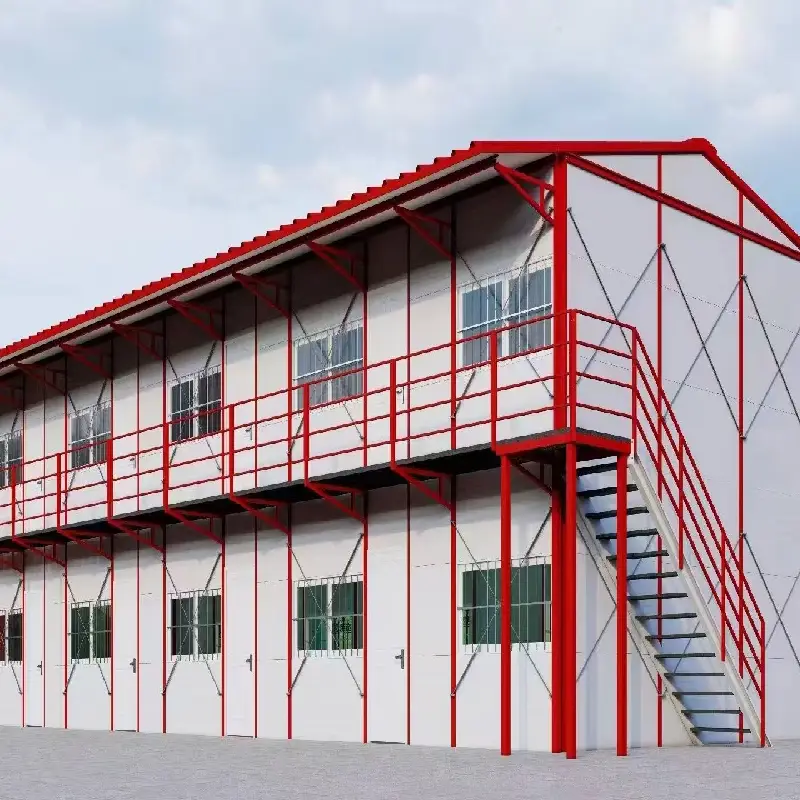
Understanding the Quickassembly Container House Concept
What Defines a Quickassembly Container House?
Quickassembly container houses leverage modular engineering and standardized components for rapid deployment. Unlike traditional construction that relies on sequential on-site trades, these units arrive with pre-installed insulation, electrical systems, and interior finishes. Key features include:
- Interlocking connectors instead of welded joints
- Plug-and-play utility ports for fast hookups
- Foldable wall and roof panels that minimize transport volume
Manufacturers like GS Housing report up to 90% factory completion before delivery (2024 Modular Housing Report), enabling final assembly in days rather than months.
Modular and Prefabricated Design Principles Behind Quickassembly
Off-site manufacturing eliminates weather delays and allows parallel workflows—foundations are prepared while modules are built in climate-controlled facilities. According to a 2023 Ponemon Institute study, this approach significantly reduces:
| Factor | Traditional Build | Quickassembly |
|---|---|---|
| Labor hours | 1,200+ | 300–400 |
| Weather-related delays | 23% of projects | 4% |
| Material waste | 30% | 8–12% |
These efficiencies allow crews to assemble a basic 2-bedroom unit in under 8 hours using standard forklifts.
Comparison with Traditional Container Home Construction Timeline
While traditional container homes take 6–12 months from design to occupancy, quickassembly models achieve:
- 80% faster permitting through pre-certified modular designs
- 50% shorter installation via crane-assisted positioning
- Zero on-site fabrication — no cutting or welding required
Data from the Modular Building Institute (2023) shows 78% of quickassembly projects meet move-in deadlines within 3 weeks, compared to 42% for conventional builds.
The Role of Factory-Built Efficiency in Rapid Deployment
Factory-built methods transform deployment timelines by completing 60–80% of construction off-site under controlled conditions. This reduces on-site labor needs by 60–70% (Modular Building Institute, 2023), allowing communities to transition from foundation work to occupancy in days rather than months.
How Factory-Built Container Homes Reduce On-Site Labor Time
By fabricating wall panels, roofing, and floor modules off-site, teams avoid weather disruptions and linear workflows. Factories support parallel processes such as structural assembly and MEP rough-ins while site preparation occurs simultaneously:
| Factory Work | On-Site Work | Time Savings |
|---|---|---|
| Structural assembly | Foundation curing | 15–20 days |
| Electrical/plumbing rough-ins | Utility trenching | 7–10 days |
| Interior framing | Material delivery/staging | 5–8 days |
This coordination slashes on-site labor hours by up to 80% for standard configurations, where crews only connect pre-engineered parts.
Pre-Wiring, Insulation, and Interior Finishes Before Delivery
Factories install wiring conduits, HVAC ductwork, and spray foam insulation with precision, eliminating tasks that typically require 120–150 on-site labor hours per unit. Bathroom pods and kitchen cabinetry arrive 90% complete, reducing field adjustments and rework.
Quality Control and Standardization in Off-Site Manufacturing
Robotic welders and automated inspection systems ensure 99.8% dimensional accuracy across components (Off-Site Construction Council, 2023), minimizing fit issues during assembly. Standardized bolt patterns and connection interfaces enable crane crews to erect units four times faster than traditional methods.
Step-by-Step Setup Process for Quickassembly Container Houses
Site Preparation and Foundation Readiness
A level, well-drained site is essential for stable installation. Contractors typically complete land clearing and foundation work—using concrete slabs, gravel pads, or pier systems—within 3–5 days depending on soil conditions. Proper drainage planning supports long-term durability and aligns with modern flood-resistance standards.
Transport, Placement, and Assembly Using Crane or Forklift
These ready made modules come rolling in on flatbed trucks and then get put into place using either cranes or forklifts depending on what works best for the job. When it comes to multi unit setups where everything is already aligned properly at the factory, assembly goes about 80 percent quicker compared to traditional construction methods. Take a look at something practical like attaching a standard 40 foot shipping container to its base. The latest research from a modular housing report released in 2023 shows this actually takes less than two whole hours to complete. And interestingly enough, workers spend around 73% fewer man hours doing this kind of work versus building similar structures directly on site.
Connecting Utilities and Completing Final Inspections
Units come pre-wired with electrical and plumbing systems, reducing on-site utility connections to 1–2 days. Final inspections verify:
- Safety compliance: fire-rated materials and emergency exits
- System functionality: HVAC performance and waterproofing
- Code adherence: alignment with local zoning and energy regulations
Real-World Performance: Case Studies on Quickassembly Speed
10-Minute Installation of Folding Container Homes: Myth or Reality?
Some companies tout their folding container homes as having "instant" setup times, but anyone who's actually deployed these units knows better. Under ideal conditions, it still takes around 45 to 90 minutes per home to get everything ready. According to research from last year on modular housing solutions, even when using fancy hydraulic systems and pre-installed bases, installation crews spend roughly 15 to 20 minutes aligning components, another half hour securing the structure properly, plus an extra 10 to 15 minutes running through all the safety protocols. The whole process is far from what those marketing materials suggest. Claims about 10 minute setups? Those are just nice sounding numbers that don't reflect what happens on actual job sites day after day.
Deploying a Two-Unit Quickassembly Home in Under 4 Hours
Field tests confirm sub-4-hour deployments when:
- Site prep and utilities are completed 48 hours in advance
- A 12-ton crane and trained three-person crew are on-site
- Units feature fully integrated MEP (Mechanical, Electrical, Plumbing) systems
In one Florida case, two 320 sq ft units were assembled in 3 hours and 42 minutes—20 minutes for placement, 2 hours for interlocking, and 82 minutes for inspections.
From Order to Occupancy: Total Timeline for Quickassembly Models
The fastest verified project cycle included:
- 3 days for manufacturing (using pre-engineered kits)
- 2 days for transportation
- 1 day for foundation curing
- 6 hours for assembly
Documented in a 2024 California housing initiative, this 7-day timeline demonstrates how off-site fabrication can reduce typical 6–8 week container home schedules by 85%, assuming standard configurations and expedited permitting.
Key Factors Influencing Quickassembly Container House Setup Time
While quickassembly container houses dramatically shorten construction timelines, three key variables affect actual setup speed. Understanding these helps set realistic expectations while affirming the inherent efficiency of modular systems.
Impact of Site Accessibility and Weather Conditions
Flat, accessible terrain with adequate road infrastructure enables swift module delivery and crane operation. Remote or rugged sites may double setup time due to equipment logistics. Although most fabrication occurs indoors, extreme weather—such as high winds or heavy rain—can still delay outdoor assembly and utility connections.
Level of Customization and Modification Requirements
Standardized units with factory-finished interiors and plug-and-play systems require minimal field work. However, projects involving merged modules, non-standard window placements, or custom layouts extend timelines by 15–30% due to added engineering reviews and on-site modifications.
Team Expertise and Equipment Availability During Assembly
Crews that know their way around modular systems typically finish installations about 40 percent quicker compared to regular contractors who aren't used to this kind of work. Getting the right lifting gear on site when needed matters just as much though. When there aren't enough cranes available or the forklifts aren't powerful enough, projects often end up running behind schedule by somewhere between two and three extra days. That's where turnkey companies come in handy. These providers bring along their own skilled workers equipped with all the special tools required from day one, which helps avoid those frustrating delays that plague so many construction sites.
FAQ
What is a Quickassembly Container House?
A Quickassembly Container House is a modular home built using container engineering principles allowing rapid deployment with pre-installed systems including insulation and electrical connections.
How does Quickassembly container housing differ from traditional methods?
Quickassembly housing is constructed with modular prefab components, minimizing on-site work and expediting timelines, while traditional methods often require 6-12 months from design to finish.
What are the benefits of factory-built efficiency?
Factory-built efficiency reduces on-site labor by 60-70%, weather delays, and material waste, expediting construction timelines dramatically compared to traditional methods.
Are modular homes truly assembled in minutes?
Setup times can take 45 to 90 minutes due to alignment, securing components, and safety protocols, contrary to some company claims of a 10-minute setup.
What factors influence the setup time of Quickassembly homes?
Factors include site accessibility, weather conditions, customization needs, team expertise, and equipment availability, all of which can impact the overall timeline.
Table of Contents
- Understanding the Quickassembly Container House Concept
- The Role of Factory-Built Efficiency in Rapid Deployment
- Step-by-Step Setup Process for Quickassembly Container Houses
- Real-World Performance: Case Studies on Quickassembly Speed
- Key Factors Influencing Quickassembly Container House Setup Time
- FAQ