
 EN
EN
Structural Integrity: Engineered Resilience for Extreme Weather and Seismic Events
When it comes to emergency pack container shelters, structural strength is definitely at the top of the list. These shelters keep people safe when Mother Nature throws her worst at us, whether it's hurricane-force winds or shaking from earthquakes. The frames inside these containers are made with extra strong steel, and they have special connections between parts that actually go beyond what most industries require for wind protection. We test this stuff using computer models that simulate real-world conditions, and our designs can handle winds equivalent to EF3 tornadoes blowing at around 165 miles per hour. Special corner pieces help spread out the force of impacts so it doesn't hit people directly, and the way we weld everything together makes sure nothing tears open, even when flying debris hits the shelter walls hard.
Wind and Tornado Resistance: Validated Performance of Reinforced Shipping Container Frames
Ballasted foundations and aerodynamic profiles minimize uplift forces in hurricane conditions. Third-party testing confirms structural integrity remains intact at wind loads exceeding 130 psf—equivalent to Category 4 hurricane exposure. The intermodal design inherently resists torsional stresses, maintaining compartmentalization even when partially compromised.
Seismic Stability and Thermal Envelope Integrity Across -40°F to 120°F Conditions
Energy-dissipating structural systems allow controlled movement during seismic events, preventing collapse at ground accelerations up to 0.6g. Continuous insulation maintains habitable interiors across extreme temperature ranges through:
- Aerogel-infused wall cavities blocking thermal bridging
- Triple-glazed windows with low-E coatings
- Vapor barriers preventing condensation-induced corrosion
Thermal modeling shows less than 2°F interior temperature fluctuation during 24-hour arctic blasts—critical for vulnerable populations.
Life-Sustaining Systems: Air, Water, Power, and Sanitation in Emergency Pack Container Shelter
CBRN-Grade HEPA + Activated Carbon Filtration for Wildfire Smoke and Hazardous Airborne Threats
When dealing with CBRN threats chemical, biological, radiological, nuclear situations require good air cleaning systems. The best HEPA filters can catch almost all particles right down to 0.3 microns, which includes those tiny PM2.5 particles coming from wildfires too. These filters work alongside activated carbon layers that grab hold of harmful gases and VOCs. Together they form a system that keeps the air safe to breathe even when stuck indoors for days on end during emergencies. People are protected from breathing in stuff that causes lung problems and cancerous chemicals like benzene often present in smoke from fires. Plus these systems come with continuous monitoring features and easy to swap out filters so operations can keep running smoothly without needing special technicians around.
Triple-Redundant Off-Grid Power (Solar + Lithium Battery + Manual Crank) and Closed-Loop Sanitation
Having reliable power makes all the difference when lives depend on it. The system uses high-efficiency solar panels connected to lithium-ion batteries, which can keep things running for around 2 days during power cuts. There's also a hand crank option just in case something goes really wrong. This setup means lights stay on, medical equipment keeps working, and people can still communicate even when the grid fails. For sanitation, there are closed-loop systems right at the site that clean and reuse wastewater instead of letting it go to waste. This saves tons of fresh water and stops bad stuff from getting into drinking supplies. Some important parts worth mentioning include automatic waste handling that stops diseases from spreading, adjustable capacity so it fits different-sized shelters, and pumps that use less energy overall compared to standard models.
Rapid Deployment and Human-Centered Habitability of Emergency Pack Container Shelter
Tool-Free, Crane-Free Assembly in Under 4 Hours with Pre-Integrated Utilities and Climate Control
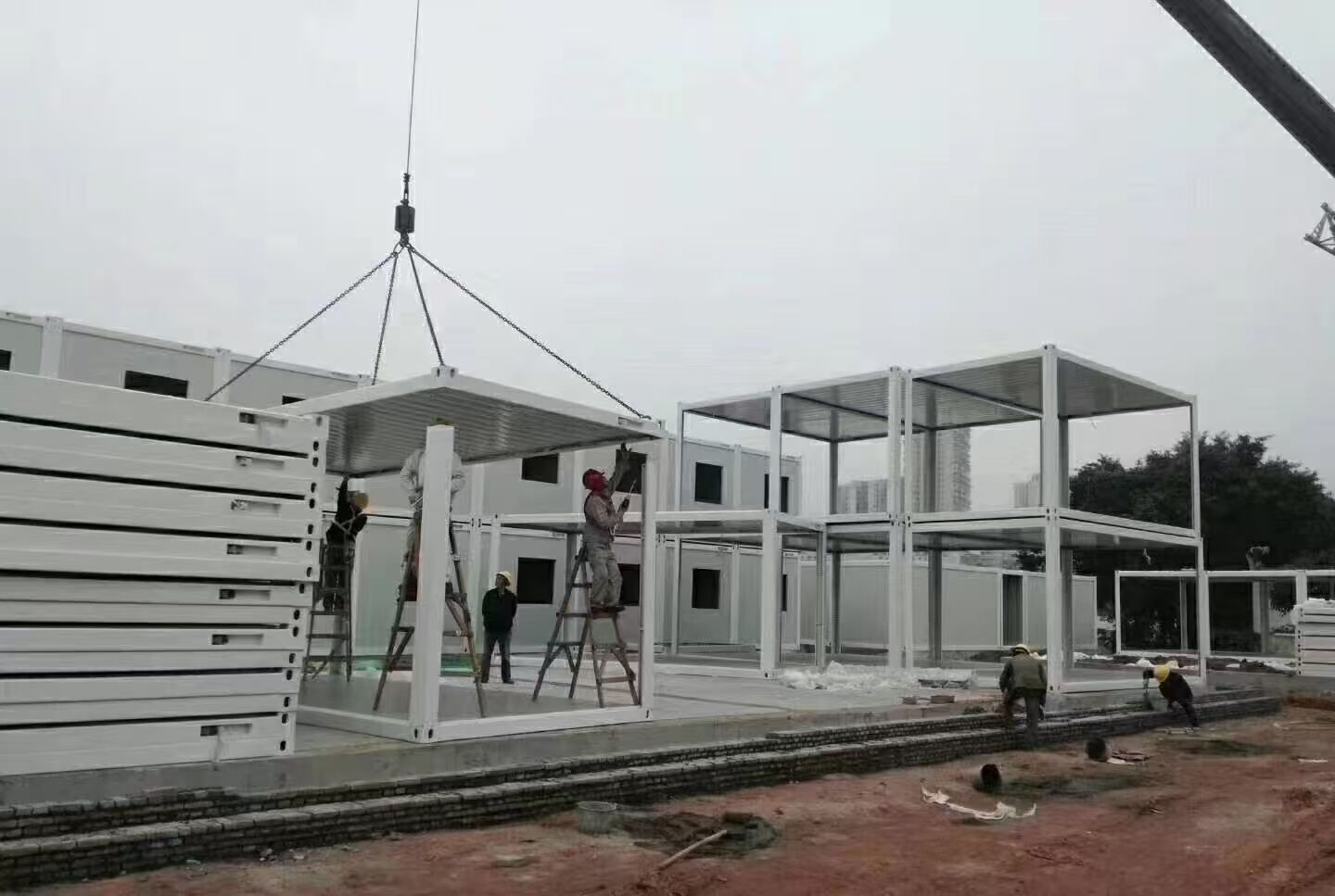
Emergency pack container shelters get ready for action much quicker than regular relief structures since they don't need any special tools or heavy equipment like cranes to set them up. Testing in real-world conditions shows that even small groups can have one deployed within just four hours, which makes a big difference when roads and bridges are damaged after disasters strike. These shelters come already equipped with solar power systems wired in from the factory, built-in connections for water filters, and ducted heating and cooling units so there's no complicated installation needed at the site. The design focuses on people first, ensuring occupants feel comfortable right away. Walls inside are specially treated to keep noise levels below 45 decibels, similar to quiet library environments, and the insulation prevents temperature extremes regardless of where they're deployed. Because of their folding design, transport is super efficient too. Eight complete shelters fit onto a single flatbed truck, speeding up responses across whole communities. Plus, the modular parts can be rearranged after emergencies to serve as temporary medical clinics or command posts without needing new buildings constructed from scratch.
Comprehensive Security and Occupant Protection in Emergency Pack Container Shelter
The emergency pack container shelter goes beyond just being strong enough to withstand damage and keep people alive. It also has solid security measures built right in for when things get really bad. The physical protection is pretty robust too, with heavy-duty doors that are tough to break through and windows made from special glass that can take a beating without shattering. These features make it much harder for anyone to force their way inside during situations like riots or when there's widespread theft happening nearby. Inside the shelter, there are cameras watching over everything along with strict control over who gets in where. This helps keep things orderly and ensures the most at-risk individuals stay safe, something that many temporary shelters struggle with according to field reports from disaster zones around the world.
The design incorporates psychological safety through various features. Sound dampening materials help cut down on overwhelming noise levels, and separate compartments give families their own space plus areas for medical staff to work without interruptions. When power goes out, emergency lights kick in and last for around three days, so people don't get lost or confused. There's also a central point where everyone can communicate instantly with rescue teams outside. All these thoughtful touches change ordinary shelters into places that feel safe and respectful rather than just temporary housing. People who have been forced to leave home find it easier to cope when they're in an environment that supports both their physical needs and emotional well-being.
FAQ Section
What materials are used for the structural integrity of the shelter?
The frames inside these shelters use extra strong steel with special connections that exceed industry requirements, ensuring resilience against extreme weather and seismic events.
How is air quality maintained inside the shelter?
The shelter uses CBRN-grade HEPA and activated carbon filters to cleanse air from tiny particles and harmful gases, ensuring a safe breathing environment during emergencies.
What power sources does the shelter rely on?
The shelter uses triple-redundant off-grid power systems that include solar panels, lithium-ion batteries, and manual crank options to ensure reliability.
How quickly can the shelter be deployed?
The shelters can be set up in under 4 hours without special tools or heavy equipment, and come equipped with pre-integrated utilities for immediate use.
What security measures are in place in the shelter?
Heavy-duty doors, special glass windows, and monitoring cameras ensure robust security against external threats, maintaining occupant protection.
Table of Contents
- Structural Integrity: Engineered Resilience for Extreme Weather and Seismic Events
- Life-Sustaining Systems: Air, Water, Power, and Sanitation in Emergency Pack Container Shelter
- Rapid Deployment and Human-Centered Habitability of Emergency Pack Container Shelter
- Comprehensive Security and Occupant Protection in Emergency Pack Container Shelter
- FAQ Section