
 EN
EN
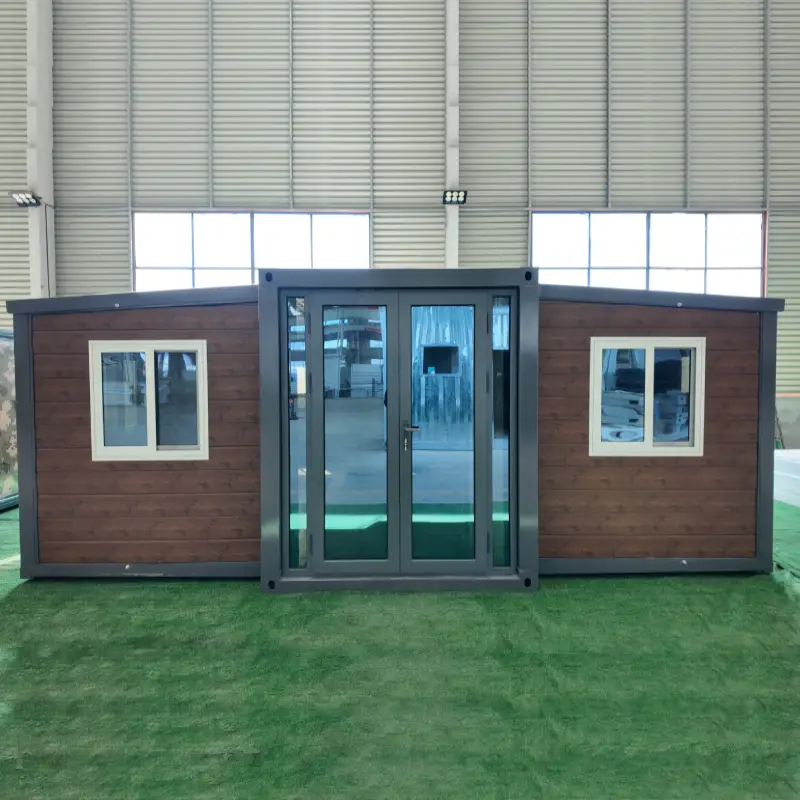
Cost-Effectiveness of Bulk Pack Container Housing vs. Traditional Construction
Initial Cost Savings in Large-Scale Deployments of Bulk Pack Container Housing
Bulk pack container housing reduces material costs by 40–60% through repurposed steel modules, while factory fabrication cuts on-site labor needs by 70% (Modular Building Institute 2023). Volume discounts further enhance savings—projects ordering more than 50 units typically achieve 15–25% reductions in procurement costs.
Long-Term ROI and Maintenance Savings in Modular Construction Projects
Corrosion-resistant steel frames and standardized components result in 22% lower annual maintenance expenses compared to traditional buildings, amounting to $18,000 saved per 100 m² over 15 years. Units retain 94% material integrity after initial use (World Steel Association 2022), supporting 5–7 reuse cycles without structural compromise.
Case Study: Cost Analysis of a 500-Unit Urban Development Using Bulk Pack Container Housing
A mixed-use development in Singapore deployed 500 container units at $740/m², compared to $1,200/m² for conventional construction—a total saving of $3.7 million. Key outcomes included:
| Category | Bulk Pack Container | Traditional Build |
|---|---|---|
| Construction Duration | 5 months | 16 months |
| Waste Generation | 5% | 30% |
| Relocation Flexibility | Full | None |
Comparison With Traditional Brick-and-Mortar Construction Budgets
While brick-and-mortar construction offers design familiarity, bulk pack systems eliminate $38/sqft relocation fees and reduce permitting delays by 18 weeks on average. Over a 30-year lifecycle, traditional builds incur 60% higher costs due to material degradation and retrofitting requirements.
Rapid Deployment for Time-Sensitive and Large-Scale Projects
Speed Advantages From Off-Site Fabrication and Parallel Workflows
Bulk pack container housing accelerates project timelines by enabling simultaneous off-site manufacturing and site preparation. Factory-controlled production avoids weather disruptions, while concurrent workflows deliver 42% faster cycle times than traditional methods, according to 2023 modular construction data.
How Bulk Pack Container Housing Reduces On-Site Construction Time by Up to 60%
Pre-installed utilities and standardized connections allow crews to assemble units three times faster than conventional builds. Recent infrastructure projects achieved 57–63% reductions in active construction phases by eliminating masonry curing and interior fit-out delays—significantly lowering labor and financing costs during buildout.
Case Studies Demonstrating Rapid Deployment in Mining Camps and Emergency Medical Units
One Canadian mining firm managed to build shelter for around 120 workers in just 11 days, which is roughly 86 percent quicker compared to standard camp building methods. When the refugee situation flared up in Central Asia back in 2022, various non-profit organizations were able to set up approximately 90 modular medical triage units within less than three days straight. They did this by utilizing ready-made utility pathways and those clever stackable design features. Looking at these real world applications shows how dependable this approach can be when time matters most for critical missions where getting things right on schedule isn't just nice but absolutely necessary.
Scalability and Flexibility Through Modular Design
Flexibility and Scalability in Evolving Project Demands Using Bulk Pack Container Housing
Bulk pack container housing with its modular design gives developers real flexibility when it comes to scaling up or adjusting units without much disruption. Traditional fixed buildings just can't keep up with all the changes that happen over time like population growth, new zoning laws popping up, or when the space needs to serve different purposes halfway through a project. According to research from the Urban Development Institute back in 2023, projects using this modular approach managed to tweak their floor layouts about 58 percent quicker when expanding in phases compared to conventional methods. That kind of adaptability makes a big difference for long term planning and responsiveness to market conditions.
Customization Options for Schools, Housing, and Temporary Facilities
Despite standardized dimensions, bulk pack containers support diverse applications:
- Educational campuses with science labs and open-plan classrooms
- Multi-story worker housing featuring fire-rated stair modules
- Pop-up medical clinics equipped with HVAC isolation zones
A leading manufacturer delivered 200 customized units for a hybrid refugee settlement in Jordan, integrating residential blocks with sanitation hubs and vocational training centers within eight weeks.
Industry Paradox: Standardization vs. Customization in Modular Builds
Although based on uniform structural components (2.4m width, corten steel), bulk pack systems achieve design uniqueness through:
- Exterior cladding options like wood, composites, or living walls
- Interior layout flexibility from studio to 4-bedroom configurations
- Stackable designs reaching up to 8 stories with engineered reinforcements
A 2024 cost study showed that combining 70% standardized modules with 30% custom elements reduced material waste by 19% versus fully bespoke builds—demonstrating how hybrid approaches resolve the efficiency-versus-design tension.
Space Efficiency and Vertical Stacking for High-Density Applications
How Bulk Pack Container Housing Maximizes Space in Dense Urban Environments
Bulk pack units require 23–35% less ground area than traditional buildings while delivering equivalent usable space through vertical stacking. Their standardized dimensions minimize clearance gaps between structures, optimizing land use in high-density urban settings.
Vertical Stacking Capabilities and Compliance With Structural Safety Standards
Modern systems support up to 8-story configurations using reinforced corner castings and interlocking mechanisms. Independent testing confirms compliance with extreme conditions:
- Wind resistance up to 140 mph (ICC-ES 2023)
- Seismic Zone 4 performance
- Continuous load path integration
- Galvanized steel bracing and shock-absorbing base isolators
These features ensure structural integrity without sacrificing scalability.
Data Insight: 40% Increase in Unit Density Compared to Single-Level Temporary Structures
Analysis of 12 urban developments reveals that bulk pack container housing delivers 38–42 more units per acre than single-level temporary solutions. This increased density enables cities to house 1,200 residents on sites previously limited to 850—providing critical capacity for disaster relief and workforce housing.
Sustainability, Durability, and Logistics Advantages of Bulk Pack Container Housing
Reducing Logistics Costs and Carbon Footprint Through Collapsible Design
When empty, collapsible sidewalls cut down on shipping space by around 80%, which brings transportation costs down roughly 35% compared with traditional fixed modular units according to industry reports from late 2023. A single flatbed truck actually manages to transport 12 of these collapsed units instead of just four when they're fully assembled. That means significantly less fuel burned and about 30% fewer carbon emissions per kilometer traveled. For cities packed with people such as Singapore or Mumbai where space is at a premium, this kind of efficiency really helps companies meet their environmental, social, and governance objectives without breaking the bank.
End-of-Life Design Fostering Circular Reuse Economies
Steel framed units actually help with circular economy goals since around 92 percent of their parts can be reused or recycled according to recent construction waste reports from 2022. Wood frame temporary housing tells a different story though. Each batch of 50 units ends up creating about 18 tons worth of garbage for landfills. That's not good news at all. Bulk pack containers tell another tale entirely. After serving their main purpose, these containers find new life as retail shops, storage areas, or even emergency shelters when needed most. The fact that they last longer fits right into what the Ellen MacArthur Foundation stands for. And financially speaking, companies save somewhere between 15 to maybe 20 percent on those initial purchase costs just by extending the product lifespan across ten years or so.
Steel Structure Durability and Anti-Corrosion Treatment Extending Lifecycle
Marine-grade corten steel and hot-dip galvanizing provide 47% greater weather resistance than conventional materials (2024 Construction Materials Study). Units are tested to withstand:
- 120 mph winds (Category 4 hurricane force)
- 25 lbs/sqft snow loads
- 8.0 magnitude seismic events
With an average service life of 40 years, they significantly outperform temporary wood structures needing replacement every 7–10 years—making them ideal for remote camps and disaster response.
Controversy Analysis: Are Reused Containers Truly 'Green'?
While 78% of architects support container reuse in principle (2023 AIA Sustainability Survey), practical concerns persist:
| New Containers | Reused Shipping Containers | |
|---|---|---|
| Chemical Treatments | Controlled VOC coatings | Potential pesticide/chemical residue |
| Energy Intensity | 15 kWh/sqft production | 22 kWh/sqft remediation |
| Carbon Footprint | 8.7 tons CO2/unit | 6.1 tons CO2/unit |
This trade-off has led many developers to adopt purpose-built container units made with 76% recycled steel—avoiding contamination risks while maintaining environmental credibility.
Streamlined Transport and Storage Across Multiple Project Phases
The collapsible design minimizes staging footprint: 120 units occupy just 40% of the space required for conventional modular housing. During the 2025 Brisbane Olympics infrastructure rollout, this enabled:
- 63% faster site setup
- 41% lower crane rental costs
- 28% reduction in temporary storage fees
Interlocking corner castings allow secure outdoor stacking for 12–18 months without deterioration—addressing logistical bottlenecks in large-scale, phased developments.
FAQ
What is bulk pack container housing?
Bulk pack container housing involves using repurposed steel shipping containers as building units. These modules offer a cost-effective, modular solution for various construction needs, from residential to commercial projects.
How does bulk pack container housing save on construction costs?
It saves costs by reducing material expenses through the use of repurposed steel modules and minimizing on-site labor requirements due to factory fabrication, leading to lower procurement and maintenance costs.
What are the environmental benefits of using container housing?
Container housing reduces logistics costs and carbon footprint through collapsible design, promotes end-of-life recycling, and aligns with circular economy goals by repurposing steel units, thus reducing landfill waste.
How quickly can bulk pack container housing be deployed?
Projects benefit from faster deployment due to off-site fabrication, parallel workflows, and pre-installed utilities, reducing on-site construction time by up to 60% compared to traditional methods.
Is container housing structurally safe?
Yes, modern container housing meets structural safety standards, supporting up to 8 stories and passing wind resistance, seismic, and load tests, ensuring safe and durable construction.
Table of Contents
-
Cost-Effectiveness of Bulk Pack Container Housing vs. Traditional Construction
- Initial Cost Savings in Large-Scale Deployments of Bulk Pack Container Housing
- Long-Term ROI and Maintenance Savings in Modular Construction Projects
- Case Study: Cost Analysis of a 500-Unit Urban Development Using Bulk Pack Container Housing
- Comparison With Traditional Brick-and-Mortar Construction Budgets
- Rapid Deployment for Time-Sensitive and Large-Scale Projects
- Scalability and Flexibility Through Modular Design
- Space Efficiency and Vertical Stacking for High-Density Applications
-
Sustainability, Durability, and Logistics Advantages of Bulk Pack Container Housing
- Reducing Logistics Costs and Carbon Footprint Through Collapsible Design
- End-of-Life Design Fostering Circular Reuse Economies
- Steel Structure Durability and Anti-Corrosion Treatment Extending Lifecycle
- Controversy Analysis: Are Reused Containers Truly 'Green'?
- Streamlined Transport and Storage Across Multiple Project Phases
- FAQ