
 EN
EN
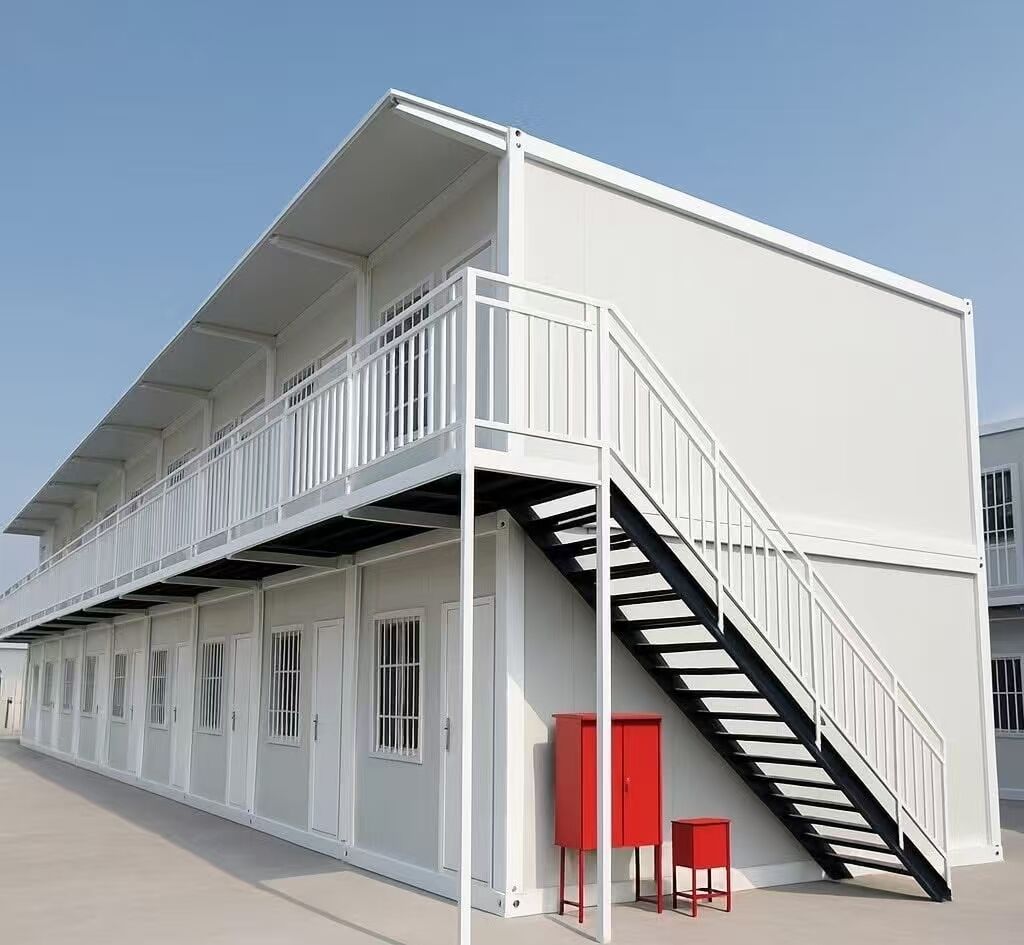
Bulk Pack Container Housing Enables Unmatched Speed via Factory Prefabrication
How standardized bulk pack production cuts on-site construction time by 40–60% versus traditional builds
When it comes to bulk pack container housing, factory prefabrication changes everything for quick deployment. About two thirds to four fifths of the actual building work happens inside factories where conditions are stable and predictable. No more waiting around for rain or snow to stop before continuing construction. While crews are getting ready at the site location, manufacturers are already putting together the containers back at the factory. The standardized parts mean fewer workers are needed once everything arrives onsite, cutting down labor costs roughly forty percent. Assembly goes much faster too, so projects finish anywhere from forty to sixty percent quicker than traditional approaches according to McKinsey's research last year. What really stands out though is how factory precision cuts down on mistakes. With machines doing most of the cutting and welding, there's far less need for fixing errors later on, which means every container coming off the production line looks pretty much exactly like all the others.
From factory floor to site-ready: Real-world deployment of bulk pack container housing in under 72 hours
Bulk pack systems really boost how fast things get deployed because they're so logistically efficient. When these units arrive on site, they already come with all the necessary electrical work, plumbing, and insulation installed, meaning people can actually start living there just a few hours after unloading. Think about disaster zones for instance. Last year, rescue teams managed to put together entire communities of around 50 units in less than three days flat. That's huge compared to regular building methods that take months. Why? Well, it all comes down to transportation optimization. The components are packed flat so one truck can carry anywhere between 3 to maybe 5 complete units. Plus, everything stacks neatly which means more stuff fits in each vehicle. We saw this firsthand during recent floods when emergency crews had no choice but to rely on these quick setup solutions since traditional houses simply couldn't be built fast enough.
Bulk Pack Container Housing Offers Proven Scalability and Modular Flexibility
Plug-and-play expansion across large-scale deployments—500+ units in Saudi NEOM and beyond
The inherent flexibility supports diverse configurations across terrains and purposes:
- Vertical stacking capabilities enable high-density settlements while maintaining structural integrity
- Horizontal clustering allows customized community layouts (e.g., central amenities blocks with radial housing units)
- Future expansion requires minimal site disruption since new modules integrate with existing utility corridors
Modular building cuts down on site work by around 40 to 60 percent when compared with regular construction methods according to data from the Modular Building Institute in 2023. This means projects get done faster without breaking the budget. When it comes to temporary shelters, disaster relief efforts, or worker accommodations, container based housing offers flexible options that expand right along with what people need. There's no risk of building too much since these systems adapt exactly to requirements, getting occupied quickly when time matters most. Plus, because these containers can be taken apart and used again for different purposes, they last longer than conventional structures, making them a smart investment for companies working on various construction sites over time.
Bulk Pack Container Housing Delivers Cost Efficiency Without Compromising Customization
30–50% lower total project cost vs. stick-built alternatives, per HUD 2023 Modular Cost Benchmark Report
Container housing in bulk packs delivers serious money savings because it takes advantage of factory production efficiencies. When we look at waste levels, standardized production brings material waste down to around 5%, which is way better than the 30% typically seen in traditional building methods. Plus, buying materials in bulk can cut individual unit costs anywhere between 40 to 60 percent. The HUD released their 2023 Modular Cost Benchmark Report recently, and it shows something interesting: container module projects tend to cost 30 to 50% less overall than regular stick-built homes. Construction expenses are averaging about $650 per square meter for containers versus roughly $1,200 per square meter when using conventional building techniques. Why does this happen? Mainly because these projects take much less time to complete - usually 4 to 6 months instead of the usual 12 to 18 months for traditional construction. They also require fewer workers on site, yet still maintain solid structural quality that meets all safety standards.
How standardized bulk pack container housing maintains high design adaptability for diverse use cases
The inherent modularity of bulk pack container housing enables remarkable customization within standardized frameworks. Corrosion-resistant steel shells serve as blank canvases for:
- Multi-unit configurations (stacked or side-by-side)
- Purpose-specific interiors (medical clinics, classrooms, or luxury residences)
- Climate-adaptive modifications like hurricane bracing or arctic insulation
This flexibility supports diverse applications—from mining camps to luxury eco-resorts—with units reconfigurable across projects. One Australian mining operation achieved 80% asset reuse across three sites by repurposing modules, demonstrating how standardization enhances long-term adaptability.
Bulk Pack Container Housing Meets Critical Real-World Demands: Workforce, Emergency, and Transitional Housing
Bulk pack container housing offers fast, flexible alternatives when regular building methods fall short, especially for workers at remote industrial sites, people needing shelter after disasters, and temporary communities during city changes. When companies need to house staff in places like mines or oil rigs, these containers solve big logistical problems because they come ready to live in right away, keeping crews productive even in isolation. After disasters strike, like hurricanes or earthquakes, the prefabricated nature means we can get them on site within three days max, which matters a lot when families are displaced and need dry shelter with toilets and lights quickly. We've seen this work wonders in areas recovering from floods and during urban renewal projects where temporary homes must last until permanent ones go up. The containers themselves can be moved around or changed as situations develop. What makes this approach so valuable is not just speed but cost savings too, cutting down on site labor costs between 40 to 60 percent compared to traditional construction methods. That's why many organizations keep turning back to container housing whenever time runs short and flexibility becomes essential.
FAQ
What are the benefits of bulk pack container housing?
Bulk pack container housing offers speed through factory prefabrication, scalability, modular flexibility, cost efficiency, and adaptability for diverse use cases.
How long does it take to deploy container housing?
Bulk pack container housing can be deployed and ready for occupation in under 72 hours, as everything is prefabricated and optimized for transportation.
What are the typical cost savings compared to traditional construction?
Container housing projects can reduce costs by 30 to 50% compared to traditional stick-built alternatives, as per the HUD 2023 Modular Cost Benchmark Report.
Table of Contents
- Bulk Pack Container Housing Enables Unmatched Speed via Factory Prefabrication
- Bulk Pack Container Housing Offers Proven Scalability and Modular Flexibility
- Bulk Pack Container Housing Delivers Cost Efficiency Without Compromising Customization
- Bulk Pack Container Housing Meets Critical Real-World Demands: Workforce, Emergency, and Transitional Housing